Why Can't I Poop? Colon Motility Is Why Millions Over 50 Stay Backed Up

If you strain, wait days, and never feel fully empty — no matter how much water or fiber you force down — stuck stool is usually a sign of slowed colon motility, not your diet. Here's what that means and what actually helps.

Watch: The Root Cause & Daily Fix Dr. Feststein Recommends → Free presentation — see what actually works

100% Free  ·  No credit card required  ·  Secure page

"Why can't I poop?" If you're reading this, you already know exactly what it's like to sit there and just... nothing.

Not once in a while. Constantly. You strain for 10, 15, 20 minutes. Maybe all you get is a few hard little pellets. Maybe nothing at all. And even on your best days, you never walk away feeling truly, completely empty.

You've tried the things everyone tells you to try. More water. More fiber. Prunes. Store-bought fiber powder. Maybe even a laxative when things got bad enough.

And yet — you're still stuck.

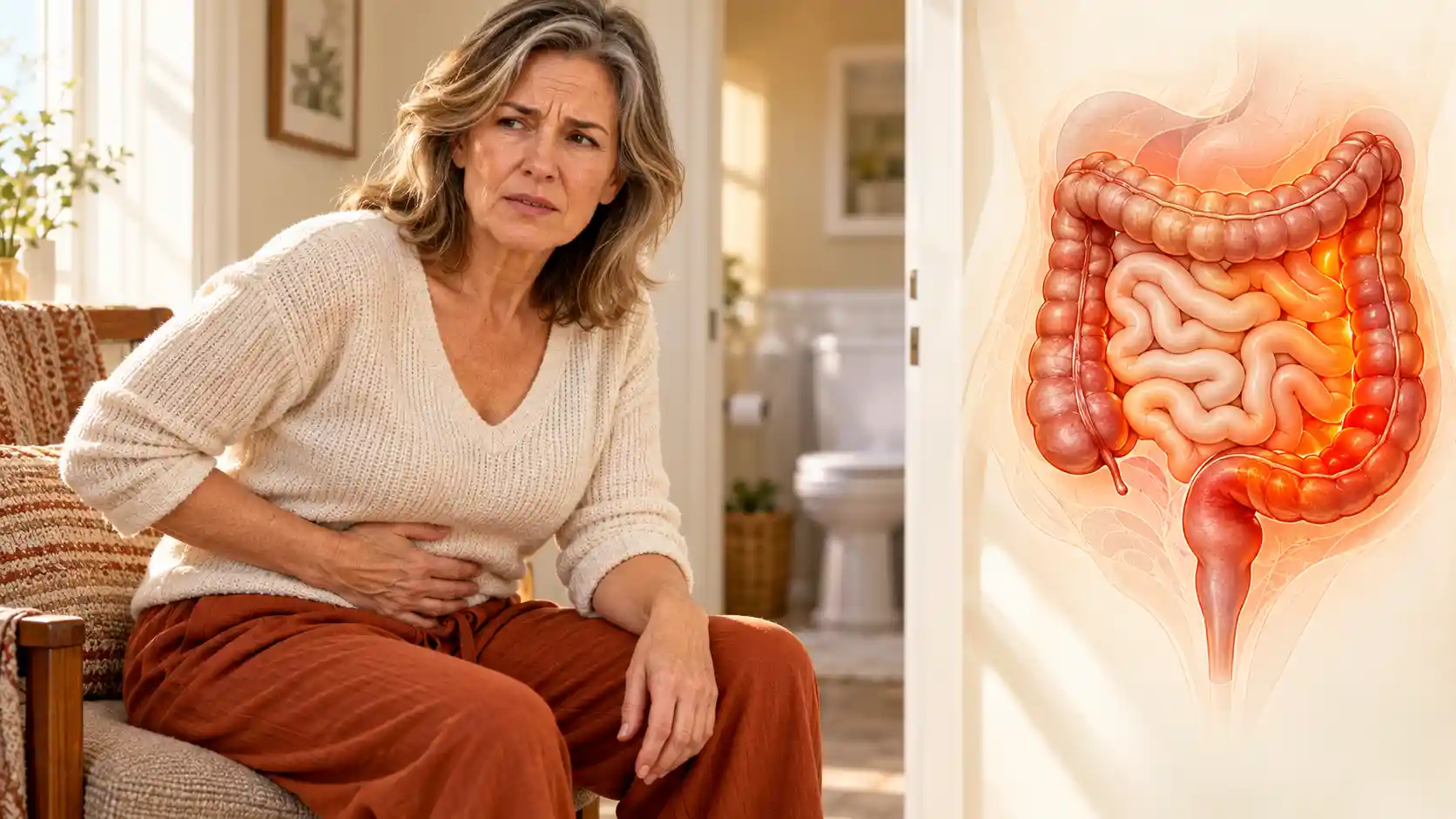
Here's what's usually going on: your colon moves waste along through a wave-like muscle contraction called peristalsis. That process is what's known as colon motility — essentially, how efficiently your colon pushes things through. Stool typically slows down most in an S-shaped section near the end of the colon called the sigmoid colon, where the twists and turns make it easy for waste to sit and harden if the muscles pushing it along have weakened. When motility slows down, waste sits longer, more water gets reabsorbed from it, and you end up with stuck stool that's harder and slower to pass, no matter how much fiber or water you add on top. Motility naturally tends to decline with age, changes in nerve signaling, and hormonal shifts — which is why this becomes more common after 50, even in people who eat well.

"Most of my patients have tried every fiber powder and laxative on the shelf before they ever come see me. Fiber and laxatives treat the symptom, not the cause — because in most cases, this isn't a fiber problem. It's a colon motility problem."

Dr. Joe Feststein has spent over 15 years working with patients on chronic constipation. In his clinical work, he's found that slowed colon motility — not diet — is behind most of the cases he sees in patients over 50.

If any of this sounds familiar, keep reading:

Does This Sound Like You?

You strain for 10-20 minutes and barely go, or don't go at all
Days go by — sometimes 3, 4, even 5 — without a bowel movement
You never feel fully, completely empty
Your stomach feels swollen and heavy, like you're carrying extra weight in your gut
Regular gas and bloating that build up as the day goes on
You plan your day around whether — or when — you'll be able to go
Unexplained fatigue or sluggishness that came on gradually

If you checked even three of those boxes, slowed colon motility is worth understanding — because it's usually the piece that fiber-first advice leaves out.

Why Fiber, Laxatives & Probiotics Often Fall Short

Fiber: Adds more bulk to bowels that are already backed up, which can sometimes make things feel worse before better
Laxatives: Force contractions rather than restoring natural motility, and overuse can reduce the colon's own response over time
Probiotics: Support gut bacteria balance, but don't directly address slowed colon motility on their own

So if fiber, laxatives, and probiotics don't fix slowed colon motility — what does? In his free presentation, Dr. Feststein breaks down the root cause behind why colon motility slows down in the first place, and walks through the daily routine he now recommends to patients instead of the usual fiber-and-laxative cycle.

🩺

About the Doctor Featured in This Report

Dr. Joe Feststein is a physician focused on digestive health, with over 15 years of clinical experience helping patients address chronic constipation through natural, non-invasive methods.

🩺 15+ Years Clinical Practice 📚 Author of 2 Health Books

Thousands of people over 50 have already watched Dr. Feststein's free presentation to understand why their colon motility slowed down — and what he recommends instead of another round of fiber and laxatives.

"By the time most of my patients find me, they've already tried everything their doctor told them to," he says. "The good news is, once you understand what's actually happening inside your body, the fix is far simpler than anyone expects."

His presentation is straightforward, free of medical jargon, and takes less than an hour to watch.

Watch: The Root Cause & Daily Fix Dr. Feststein Recommends → Free presentation — see what actually works

100% Free  ·  No credit card required  ·  Secure page

What Viewers Are Saying

Robert H.
★★★★★
Columbus, OH  ·  Age 63

"I'd go three, sometimes four days without being able to go. Tried every fiber powder at the pharmacy. Nothing changed. This video explained colon motility in a way my own doctor never once did in twenty years. I wish I'd seen it a lot sooner."

✓ Verified Viewer
Linda K.
★★★★★
Phoenix, AZ  ·  Age 57

"I was bloated most days by the evening. I watched this a little skeptical, honestly. But Dr. Feststein explained things about how my colon actually works that no doctor ever told me in one visit. It finally clicked for me."

✓ Verified Viewer
Frank D.
★★★★★
Savannah, GA  ·  Age 68

"My doctor kept telling me to eat more veggies and drink more water. I did all of it religiously. Still stuck. A friend sent me this video and I watched the whole thing twice. Can't recommend it enough."

✓ Verified Viewer

Common Questions

Why can't I poop no matter what I try?+
Struggling to go even with fiber, water, and exercise often comes down to slowed colon motility, meaning waste moves through the intestines more slowly than it should. This usually becomes more common after 50 as motility naturally declines.
Why don't fiber, laxatives, or probiotics fully fix it?+
Fiber adds bulk, laxatives force contractions, and probiotics support gut bacteria — but none of them directly address slowed colon motility, which is why symptoms often come back.
Is it dangerous to stay backed up like this?+
Chronic constipation can lead to bloating, discomfort, and in some cases hemorrhoids or fecal impaction if left unaddressed. Dr. Feststein covers these risks and when to see a doctor in the presentation above.
What does Dr. Feststein check for that other doctors don't?+
After analyzing over 12,400 samples, Dr. Feststein focused on colon motility markers rather than diet alone. He explains what that involves and why it matters more after 50 in his free video presentation.
What daily habit does Dr. Feststein recommend?+
Dr. Feststein recommends a short daily routine aimed at supporting natural colon motility, inspired by dietary patterns in populations with low rates of chronic constipation. The full explanation is in his free video presentation on this page.

Ready to Learn What Actually Fixes Slowed Colon Motility?

Dr. Feststein's free presentation breaks down why colon motility slows down after 50 — and the daily routine he recommends instead of another round of fiber and laxatives.

Watch: The Root Cause & Daily Fix Dr. Feststein Recommends → Free to watch, right now

Free to watch  ·  No sign-up

Disclaimer: This content is for informational and educational purposes only. It is not intended to diagnose, treat, cure, or prevent any disease. Individual results may vary. Statements made in the video presentation have not been evaluated by the Food and Drug Administration. Always consult a qualified healthcare professional before making any changes to your diet, supplement routine, or health regimen. Testimonials shown are from real customers; individual results will vary.